

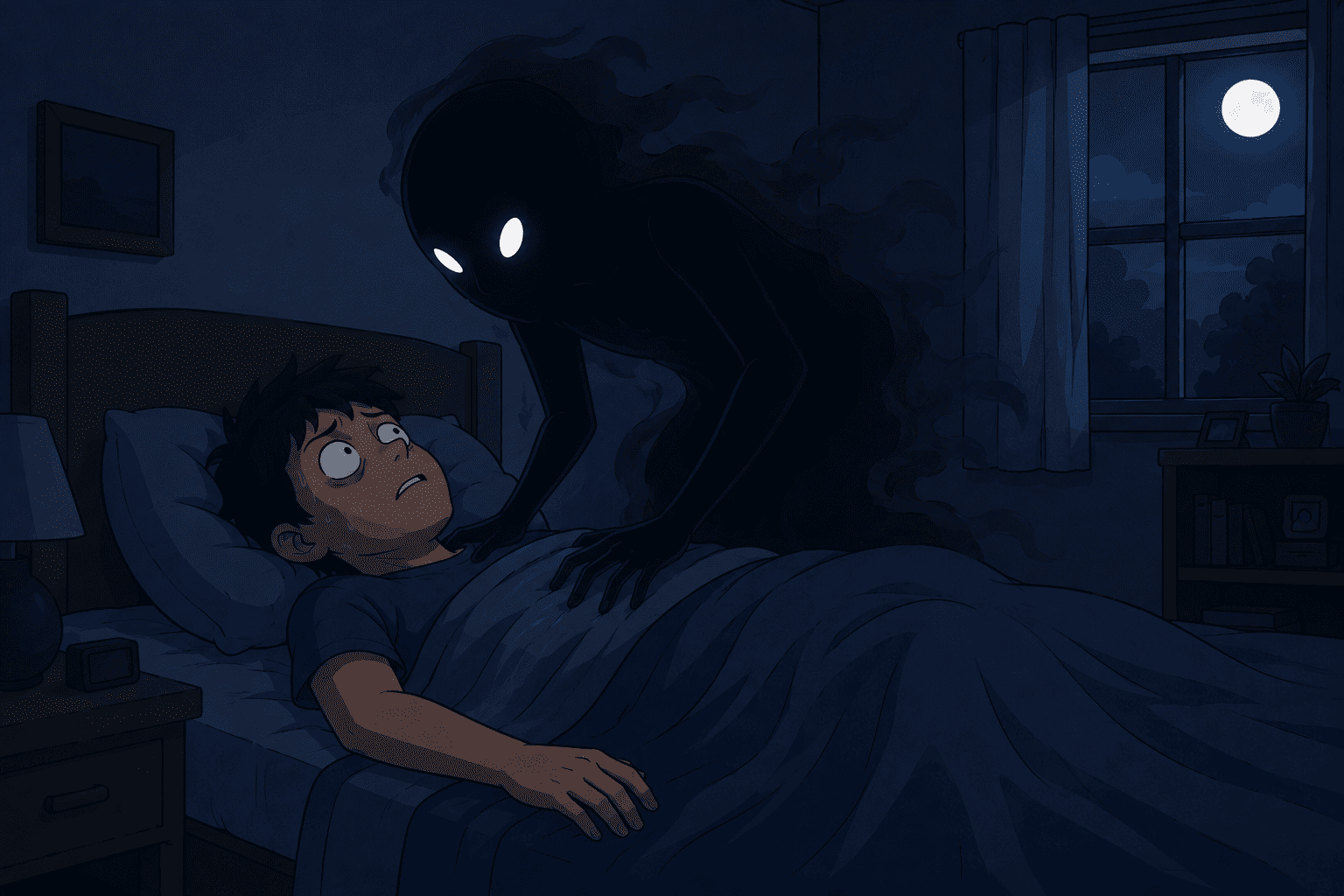
Few sleep experiences are as frightening as waking up and realizing you cannot move.
Many people describe the sensation as being fully awake but temporarily trapped inside their own body. Some report feeling pressure on the chest, sensing a presence in the room, hearing strange sounds, or even seeing figures standing nearby. Because the experience feels so vivid and realistic, sleep paralysis has inspired countless supernatural explanations throughout history.
Modern sleep science tells a different story.
Although sleep paralysis can be intensely unsettling, it is generally considered a recognized and usually harmless sleep phenomenon. Researchers now understand that it occurs when elements of REM sleep briefly overlap with wakefulness, creating a temporary mismatch between consciousness and physical movement.
Understanding how sleep paralysis works can help replace fear with knowledge and make the experience far less alarming if it happens again.
Quick Answer
Sleep paralysis is a temporary inability to move or speak that occurs while falling asleep or waking up. It happens when a person becomes conscious before the muscle paralysis normally associated with REM sleep has fully ended. Episodes typically last from a few seconds to a few minutes and may be accompanied by vivid hallucinations, pressure sensations, or feelings of fear.
What Is Sleep Paralysis?
Sleep paralysis occurs when a person becomes aware while the body remains in a temporary state of muscle paralysis associated with REM sleep.
During normal REM sleep, the brain actively suppresses most voluntary muscle movement. This process, known as REM atonia, helps prevent people from physically acting out their dreams. In most cases, the paralysis ends before full consciousness returns.
Occasionally, however, awareness returns first.
When this happens, a person may open their eyes, perceive their surroundings, and feel fully awake while remaining temporarily unable to move or speak. The experience can be confusing because the mind and body appear to be operating on different schedules.
Although the episode may feel dramatic, it is usually brief and resolves on its own.
What Does Sleep Paralysis Feel Like?
Experiences vary from person to person, but several features are commonly reported.
Many individuals describe waking up and immediately realizing they cannot move their arms, legs, or body. Some find they cannot speak despite being fully aware of their surroundings. This loss of voluntary movement often creates a powerful sense of vulnerability.
In addition to paralysis, many people experience unusual sensory phenomena. These sensations can feel extraordinarily real because they occur while consciousness is returning and elements of dream activity may still be active within the brain.
Common experiences include:
- A feeling of pressure on the chest.
- The sensation that someone is in the room.
- Hearing voices, footsteps, or other sounds.
- Seeing figures, shadows, or movement.
- Feeling touched or grabbed.
- Intense fear or panic.
Not everyone experiences hallucinations, but they are common enough to be considered a hallmark feature of many sleep paralysis episodes.
Why Does Sleep Paralysis Happen?
The most widely accepted explanation involves a temporary overlap between REM sleep and wakefulness.
REM sleep is the stage most strongly associated with vivid dreaming. During this phase, brain activity becomes highly active while most voluntary muscles remain temporarily paralyzed.
Normally, these processes remain synchronized.
The dream ends.
The paralysis ends.
Consciousness returns.
In sleep paralysis, the transition is imperfect. Awareness returns while REM-related muscle inhibition is still present. As a result, the person feels awake but temporarily unable to move.
At the same time, dream-related imagery or sensory experiences may continue briefly, contributing to hallucinations and unusual sensations.
This explanation is strongly supported by modern sleep research and helps account for many of the features commonly reported during episodes.
What Causes Sleep Paralysis?
Sleep paralysis does not always have a single identifiable cause. Instead, researchers believe multiple factors may increase the likelihood of an episode.
Sleep Deprivation
Lack of sleep is one of the most consistently reported risk factors. Disrupted sleep schedules and insufficient sleep can increase instability in sleep-wake transitions, making episodes more likely.
Irregular Sleep Patterns
People who frequently change sleep schedules, work night shifts, or experience jet lag appear to have a higher risk of sleep paralysis.
Stress and Anxiety
Psychological stress may influence sleep quality and increase the likelihood of unusual sleep experiences, including sleep paralysis.
Sleeping on Your Back
Several studies have found an association between sleep paralysis and the supine sleeping position. Although the relationship is not fully understood, many people report episodes occurring more frequently while lying on their backs.
Certain Sleep Disorders
Sleep paralysis can sometimes occur alongside conditions such as narcolepsy, although most people who experience sleep paralysis do not have narcolepsy.
Is Sleep Paralysis Dangerous?
For most people, sleep paralysis is not dangerous.
Although the experience can feel terrifying in the moment, the paralysis itself is temporary and does not prevent breathing or cause physical harm. The body continues performing essential functions throughout the episode.
The primary impact is psychological rather than physical. Fear, confusion, and anxiety are common, particularly during a person’s first experience.
However, frequent episodes that interfere with sleep quality or daily functioning should be discussed with a healthcare professional. In some cases, recurrent sleep paralysis may be associated with underlying sleep disorders that warrant evaluation.
Why Do People See Demons, Intruders, or Shadow Figures?
One of the most fascinating aspects of sleep paralysis is the remarkable consistency of certain hallucinations.
Across cultures and throughout history, people have reported sensing threatening presences, seeing shadowy figures, or feeling that someone is standing nearby. Before modern sleep science, these experiences were often interpreted as supernatural encounters.
Researchers now believe these perceptions result from the interaction between waking consciousness and lingering REM dream activity.
During REM sleep, the brain generates vivid dream imagery and emotional experiences. If aspects of this activity remain active while consciousness returns, dream content may be projected onto the waking environment.
The result can be an experience that feels completely real despite originating within the brain’s sleep-related processes.
This explanation helps account for why similar themes appear across different cultures despite varying beliefs about the supernatural.
Sleep Paralysis vs. False Awakening
Although both experiences occur near the boundary between sleep and wakefulness, they are fundamentally different.
A false awakening is a dream in which a person believes they have woken up while remaining asleep. The dreamer may get out of bed, begin daily activities, or interact with their environment before eventually realizing they were still dreaming.
Sleep paralysis occurs when a person is awake but temporarily unable to move because REM-related muscle paralysis remains active.
In other words, a false awakening involves dreaming about being awake, while sleep paralysis involves being awake but temporarily unable to move.
Sleep Paralysis vs. Lucid Dreaming
Sleep paralysis and lucid dreaming are often mentioned together because both involve unusual states of awareness during sleep. However, they are distinct experiences and should not be confused.
A lucid dream occurs when a person becomes aware that they are dreaming while the dream continues. The individual remains asleep and consciously recognizes the dream state. In some cases, they may even influence parts of the dream environment.
Sleep paralysis, by contrast, occurs when consciousness returns before REM-related muscle paralysis has fully ended. Rather than being immersed in a dream, the person is aware of their actual surroundings but temporarily unable to move.
The confusion often arises because both experiences can involve vivid imagery, unusual sensations, and a strong feeling of realism. In some situations, people may even transition between lucid dreams and sleep paralysis during the same sleep period. Despite these similarities, the underlying experiences are different.
How Long Does Sleep Paralysis Last?
Most episodes are surprisingly brief.
Although sleep paralysis can feel much longer due to fear and heightened awareness, episodes typically last anywhere from a few seconds to a few minutes. In many cases, the experience ends spontaneously as the brain and body complete the transition between sleep and wakefulness.
External stimulation can sometimes help shorten an episode. Some people report that hearing a voice, being touched by another person, or focusing on small movements such as blinking or moving a finger helps them regain control more quickly.
The important thing to remember is that sleep paralysis always ends. No matter how intense the experience feels in the moment, it is temporary.
What Should You Do During an Episode?
Knowing what is happening can significantly reduce fear.
Many people experience the most distress during their first episode because they believe something dangerous is occurring. Once a person understands that sleep paralysis is a recognized sleep phenomenon, future episodes often become less frightening.
If sleep paralysis occurs, try to focus on the following:
Stay Calm
Fear is a natural reaction, but panic can intensify the experience. Reminding yourself that the episode is temporary and harmless can help reduce anxiety.
Focus on Breathing
Although many people feel pressure on the chest, sleep paralysis does not stop normal breathing. Concentrating on slow, steady breaths can provide reassurance and reduce panic.
Try Small Movements
Rather than attempting to move the entire body, some people find it easier to focus on small movements such as wiggling a finger, moving a toe, or blinking. Regaining movement in one area may help the rest of the body follow.
Avoid Fighting the Experience
Struggling aggressively to move can sometimes increase frustration and anxiety. Many sleep specialists recommend acknowledging what is happening and allowing the episode to pass naturally.
Can You Prevent Sleep Paralysis?
There is no guaranteed way to prevent sleep paralysis completely, but several habits may reduce the likelihood of episodes.
Prioritize Consistent Sleep
Sleep deprivation is one of the strongest known risk factors. Going to bed and waking up at roughly the same times each day may help stabilize sleep patterns and reduce disruptions during sleep-wake transitions.
Get Enough Sleep
Adults generally need around seven to nine hours of sleep per night. Consistently getting adequate sleep appears to lower the risk of many sleep-related disturbances, including sleep paralysis.
Manage Stress
Stress and anxiety are commonly reported among people who experience recurrent sleep paralysis. Relaxation techniques, exercise, mindfulness practices, and healthy stress management may help improve overall sleep quality.
Review Sleep Position
Some studies suggest that episodes occur more frequently when sleeping on the back. Although this relationship is not fully understood, people who regularly experience sleep paralysis may find it helpful to experiment with different sleeping positions.
Address Underlying Sleep Problems
Conditions that disrupt sleep, such as insomnia or untreated sleep disorders, may contribute to recurrent episodes. Improving overall sleep health often reduces the frequency of unusual sleep experiences.
When Should You See a Doctor?
Occasional sleep paralysis is generally not a cause for concern.
However, medical advice may be appropriate if episodes become frequent, cause significant anxiety, interfere with sleep quality, or occur alongside other symptoms such as excessive daytime sleepiness.
A healthcare professional may also evaluate whether another sleep disorder is contributing to the problem. For example, recurrent sleep paralysis can sometimes occur in people with narcolepsy, although most individuals who experience sleep paralysis do not have narcolepsy.
Seeking professional advice can provide reassurance and help identify any underlying issues that may require treatment.
Frequently Asked Questions
How common is sleep paralysis?
Sleep paralysis is more common than many people realize. Studies suggest that a substantial percentage of people experience at least one episode during their lifetime, although frequency varies considerably between individuals.
Can you die from sleep paralysis?
No. Sleep paralysis does not stop breathing or cause death. While the experience can feel frightening, it is generally considered harmless.
Why does sleep paralysis feel so real?
The experience often combines waking awareness with lingering REM dream activity. This combination can produce vivid perceptions, strong emotions, and an unusually realistic sense of presence.
Does everyone hallucinate during sleep paralysis?
No. Some people experience only temporary paralysis without visual, auditory, or sensory hallucinations. Others experience both paralysis and vivid hallucinations during the same episode.
Can sleep paralysis happen more than once?
Yes. Some people experience only one or two episodes during their lifetime, while others experience recurrent sleep paralysis over months or years.
Bottom Line
Sleep paralysis is a temporary state in which a person becomes conscious while REM-related muscle paralysis is still active. Although the experience can feel frightening, it is generally considered a normal and harmless sleep phenomenon.
Episodes often involve an inability to move, intense fear, and, in some cases, vivid hallucinations that can seem completely real. Modern sleep research explains these experiences as the result of a temporary overlap between REM sleep and wakefulness rather than anything supernatural or dangerous.
For most people, sleep paralysis is an occasional event that resolves on its own. Maintaining healthy sleep habits, managing stress, and understanding the science behind the experience can help reduce fear and make future episodes easier to handle.