

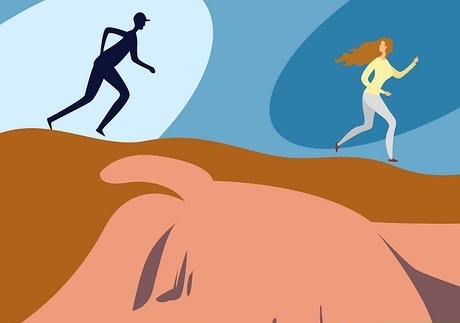
Dreams about being chased, hunted, attacked, or forced to hide from someone trying to kill you can be intensely frightening.
Many people wake up from these dreams with a racing heart, lingering anxiety, and a powerful sense of relief that the events were not real.
In some dreams, the threat is visible and recognizable. The dreamer may be pursued by a stranger, a criminal, a monster, an animal, or even someone they know personally.
In others, the danger feels more mysterious. The dreamer knows someone is trying to kill them but never actually sees who the pursuer is.
Regardless of the details, these dreams often leave people asking the same question:
Why would my mind create such a terrifying scenario?
While dreams of being chased or attacked can feel deeply personal, they are also remarkably common.
Psychologists, sleep researchers, and dream experts have long noted that chase dreams appear across cultures, age groups, and life experiences. In fact, dreams involving pursuit, escape, hiding, or danger are among the most frequently reported dream themes worldwide.
The good news is that such dreams rarely indicate literal danger.
More often, they appear to reflect emotional pressures, unresolved concerns, internal conflicts, fears, or situations that the dreamer is struggling to confront during waking life.
Understanding what these dreams may symbolize requires looking beyond the frightening imagery and exploring the emotions that drive it.
Quick Answer
Dreams about hiding or running away from someone trying to kill you often symbolize avoidance, fear, stress, emotional conflict, or situations that feel overwhelming in waking life.
Rather than predicting actual harm, these dreams frequently reflect the brain’s attempt to process anxiety, unresolved problems, difficult emotions, or perceived threats. The specific meaning depends on who is chasing you, how you respond in the dream, and what is currently happening in your life.
There is no universally accepted interpretation, but many psychologists believe chase dreams are closely linked to issues the dreamer feels unable or unwilling to confront directly.
Why Dreams About Being Chased Are So Common
Dreams involving pursuit are surprisingly universal.
People from different countries, cultures, and backgrounds often report remarkably similar experiences:
Running through unfamiliar streets.
Hiding in buildings.
Escaping from attackers.
Being hunted through forests.
Trying desperately to avoid capture.
The consistency of these dream themes has attracted significant interest from dream researchers.
One explanation comes from the idea that dreams help process emotional concerns and unresolved situations from waking life.
When people experience stress, uncertainty, conflict, or pressure, the brain may represent those feelings symbolically during sleep.
A threatening pursuer can become a powerful metaphor for something the dreamer feels unable to escape.
The “threat” may not be a person at all.
Instead, it could represent:
Work pressure.
Relationship conflict.
Financial worries.
Fear of failure.
Emotional pain.
Personal insecurities.
Major life changes.
In this sense, the dream often reflects how the dreamer feels rather than what is literally happening.
What Psychology Suggests About Chase Dreams
Modern psychology generally views dreams as reflections of emotional and cognitive processes rather than supernatural messages.
From this perspective, dreams about running away or hiding frequently involve avoidance.
Avoidance does not necessarily mean physical avoidance.
It may involve avoiding:
A difficult conversation.
An uncomfortable truth.
A major decision.
A painful memory.
Anxiety about the future.
A personal responsibility.
When something feels emotionally threatening, the mind may represent it as an external threat during dreaming.
The person chasing you becomes a symbol of the pressure, conflict, or fear that has not yet been fully addressed.
This interpretation helps explain why many chase dreams occur during periods of heightened stress.
For example, someone facing an important career decision may dream about being pursued by a dangerous stranger.
A student worried about examinations may repeatedly dream about being hunted.
A person struggling with grief may experience dreams involving escape and pursuit.
The details vary, but the underlying emotional pattern often remains similar.
The Meaning of Hiding in a Dream
Running away and hiding are closely related but not identical symbols.
In many dreams, the most memorable moment is not the chase itself but the attempt to hide.
The dreamer may squeeze into a closet, lock themselves in a room, hide beneath furniture, or seek shelter in an unfamiliar building.
Psychologically, hiding often symbolizes withdrawal or protection.
The dream may reflect a desire to avoid exposure, judgment, conflict, vulnerability, or emotional pain.
In some cases, hiding represents self-preservation.
The dreamer may be feeling overwhelmed and subconsciously seeking safety.
In other situations, hiding may suggest reluctance to confront something important.
This does not mean the dreamer is weak or cowardly.
Rather, the dream may be highlighting the natural human tendency to protect ourselves from situations that feel threatening or emotionally difficult.
The context of the dream is crucial.
Hiding from a violent attacker carries different emotional implications than hiding from a family member, friend, authority figure, or unknown presence.
Does It Matter Who Is Trying to Kill You?
Absolutely.
One of the most important details in any chase dream is the identity of the pursuer.
The person—or creature—attempting to harm you often provides valuable clues about what the dream may represent.
An Unknown Person
An unidentified attacker frequently symbolizes a vague or undefined fear.
The dreamer may feel anxious about something without fully understanding its source.
This is common during periods of uncertainty or major life transitions.
Someone You Know
When the pursuer is someone familiar, the dream may reflect unresolved emotions associated with that individual.
This does not mean the person actually intends harm.
More often, the dream reflects tension, conflict, disappointment, resentment, or emotional complexity within the relationship.
An Authority Figure
Dreams involving police officers, teachers, supervisors, or other authority figures may reflect concerns about expectations, performance, responsibility, or judgment.
A Monster or Non-Human Threat
Monsters often symbolize fears that feel larger than life.
The threat may represent anxiety, trauma, insecurity, guilt, or an emotional burden that seems difficult to control.
Because monsters are highly symbolic, their appearance often reflects how overwhelming a situation feels rather than the situation itself.
What Does It Mean If You Get Caught?
Not every chase dream ends with escape.
In many cases, the pursuer eventually catches the dreamer. Sometimes the dream ends immediately at the moment of capture. In other cases, the dream continues, revealing what happens after the confrontation.
Interestingly, being caught is not necessarily a negative sign.
From a psychological perspective, the outcome often depends on what happens next.
If the dream ends the moment you are caught, it may suggest that the underlying issue remains unresolved. The mind has reached the point of confrontation but has not yet determined the outcome.
However, if the dream continues, the experience can sometimes be surprisingly revealing.
Many dreamers report that when they finally face the pursuer, the threat becomes less frightening than expected. The attacker may transform into another person, begin speaking, disappear entirely, or lose their power.
Some psychologists interpret this as a reflection of personal growth.
The dream may be suggesting that the fear itself is more intimidating than the reality of confronting it.
This pattern appears frequently in dreams involving anxiety, self-doubt, and avoided responsibilities.
What Does It Mean If You Escape?
Escaping successfully often produces a strong feeling of relief.
At first glance, it may seem like a positive outcome, but interpretation depends on context.
In some cases, successful escape may symbolize resilience, problem-solving, or a growing sense of confidence. The dreamer may feel increasingly capable of handling challenges in waking life.
In other situations, repeated escape without resolution may indicate that avoidance is continuing.
Imagine a dream that ends the same way every time:
You run.
You hide.
You survive.
But the threat never disappears.
Such dreams may suggest that the underlying issue remains present even if it is temporarily avoided.
This distinction is important.
Escaping a danger and resolving a danger are not always the same thing.
The dream may be encouraging reflection on whether a problem is being addressed or merely postponed.
The Threat Simulation Theory
One of the most interesting scientific explanations for chase dreams comes from the Threat Simulation Theory proposed by Finnish neuroscientist Antti Revonsuo.
According to this theory, dreaming evolved as a biological rehearsal system.
Rather than being random, certain dreams may allow individuals to mentally practice responding to danger.
From an evolutionary perspective, early humans regularly faced threats such as predators, hostile groups, accidents, and environmental hazards.
A brain capable of simulating dangerous situations during sleep might have provided a survival advantage.
This theory helps explain why dreams involving pursuit, attack, danger, and escape are so common across cultures.
Even in modern life, many people’s most vivid dreams involve situations such as:
- Being chased.
- Being attacked.
- Falling.
- Losing control.
- Missing important opportunities.
- Facing overwhelming danger.
The threats may have changed, but the brain’s threat-detection systems remain highly active.
Although the Threat Simulation Theory does not explain every dream, many researchers consider it one of the most compelling explanations for recurring chase dreams.
Anxiety, Stress, and Feeling Overwhelmed
For many people, the simplest explanation is often the most accurate.
Periods of stress frequently coincide with an increase in chase dreams.
When life feels overwhelming, the mind may express that pressure through symbolic scenarios involving pursuit and danger.
Common triggers include:
Starting a new job.
Relationship difficulties.
Financial uncertainty.
Academic pressure.
Major life transitions.
Health concerns.
Family conflict.
In these situations, the dream may not be about any specific person.
Instead, the pursuer represents the emotional weight of the situation itself.
This helps explain why some people experience recurring chase dreams during particularly stressful periods and then stop having them once circumstances improve.
The dream changes because the emotional pressure changes.
Can Trauma Influence These Dreams?
Yes.
For some individuals, dreams involving pursuit, attack, or hiding may be connected to past traumatic experiences.
Research has shown that trauma can significantly influence dream content.
People who have experienced traumatic events sometimes report recurring dreams involving danger, escape, vulnerability, or helplessness.
However, it is important not to assume that every chase dream indicates trauma.
These dreams are extremely common among people with no history of traumatic experiences.
The difference often lies in frequency, intensity, emotional impact, and recurrence.
When dreams become highly distressing, interfere with sleep, or repeatedly recreate traumatic events, professional support may be beneficial.
Spiritual Interpretations of Being Chased or Hunted
Spiritual interpretations of chase dreams vary widely across traditions.
Many spiritual perspectives view the pursuer as symbolic rather than literal.
Some common interpretations include:
A lesson that has not yet been learned.
An aspect of oneself that has been ignored.
A fear that requires acknowledgment.
A period of transformation or growth.
Resistance to a life change.
In some traditions, running away symbolizes avoidance of a spiritual calling or personal truth.
The dream is interpreted as an invitation to stop running and face what is demanding attention.
Other traditions see the pursuer as representing inner conflict rather than an external threat.
These interpretations are based on belief systems rather than scientific evidence, but many people find them meaningful when viewed alongside psychological perspectives.
Common Variations of This Dream
Hiding in a House
A house often symbolizes the self in dream psychology.
Different rooms may represent different aspects of your personality, memories, or emotional life.
Hiding inside a house may therefore reflect attempts to protect yourself emotionally or avoid confronting something personal.
Running Through a Forest
Forests frequently symbolize uncertainty, confusion, or the unknown.
Being chased through a forest may reflect navigating a situation where the path forward feels unclear.
Hiding From a Serial Killer
This variation is particularly common in modern dream reports.
The killer often represents an overwhelming fear, pressure, or emotional threat rather than a literal person.
The intensity of the figure may mirror the intensity of the underlying concern.
Being Unable to Run
Many people report feeling as though their legs will not move or that they are running in slow motion.
This may reflect feelings of helplessness, lack of control, or frustration in waking life.
The sensation is so common that it appears across cultures and age groups.
Constantly Looking Over Your Shoulder
Dreams that focus on anticipation rather than direct pursuit often reflect ongoing anxiety.
The fear of being caught becomes more prominent than the chase itself.
This can mirror situations in waking life where uncertainty is causing persistent stress.
DreamDoze Perspective
At DreamDoze, we believe dreams about hiding and running away from someone trying to kill you are usually less about physical danger and more about emotional reality.
The pursuer often represents something that feels threatening, overwhelming, unresolved, or difficult to confront.
Importantly, the dream does not necessarily reveal what the threat is.
Instead, it reflects how the threat feels.
This is why two people can have nearly identical chase dreams while facing completely different life situations.
One may be struggling with career uncertainty.
Another may be navigating relationship conflict.
A third may be dealing with self-doubt or major life changes.
The imagery looks similar because the emotional experience is similar.
Rather than focusing solely on the attacker, we encourage dreamers to consider the emotions present in the dream.
What were you trying to escape?
What were you afraid would happen if you were caught?
The answers to those questions often provide more insight than the identity of the pursuer itself.
Frequently Asked Questions
Does dreaming about someone trying to kill you mean you are in danger?
Not necessarily.
Most dream researchers and psychologists view these dreams as symbolic expressions of fear, stress, conflict, or emotional pressure rather than predictions of real-world harm.
Why do I keep having the same chase dream?
Recurring chase dreams often suggest that the brain is repeatedly processing a concern, emotion, or unresolved situation.
The repetition may continue until circumstances change or the issue is addressed.
What if I never see the person chasing me?
An unseen pursuer often symbolizes vague anxiety or uncertainty.
The threat feels real, but its exact source may not yet be fully understood.
Is it bad if the attacker catches me?
Not always.
Being caught may symbolize confrontation rather than failure. In some dreams, capture represents the moment when an avoided issue can no longer be ignored.
Why do these dreams feel so real?
Threat-related dreams often activate strong emotional responses, making them especially vivid and memorable.
Fear is one of the most powerful emotions the brain processes, both during sleep and while awake.
Bottom Line
Dreams about hiding and running away from someone trying to kill you can be frightening, but they are also among the most common dream experiences reported around the world.
While the imagery may seem alarming, these dreams rarely indicate literal danger. More often, they reflect emotional pressures, unresolved concerns, fears, conflicts, or situations that feel overwhelming in waking life.
Psychological perspectives frequently interpret the pursuer as a symbolic representation of something the dreamer is struggling to face. Scientific theories such as the Threat Simulation Theory suggest that chase dreams may even serve an evolutionary purpose by allowing the brain to rehearse responses to danger.
Ultimately, the meaning of the dream depends less on the attacker and more on the emotions surrounding the experience.
By paying attention to what you are running from—and why—you may gain valuable insight into challenges, concerns, or personal growth occurring in your waking life.