

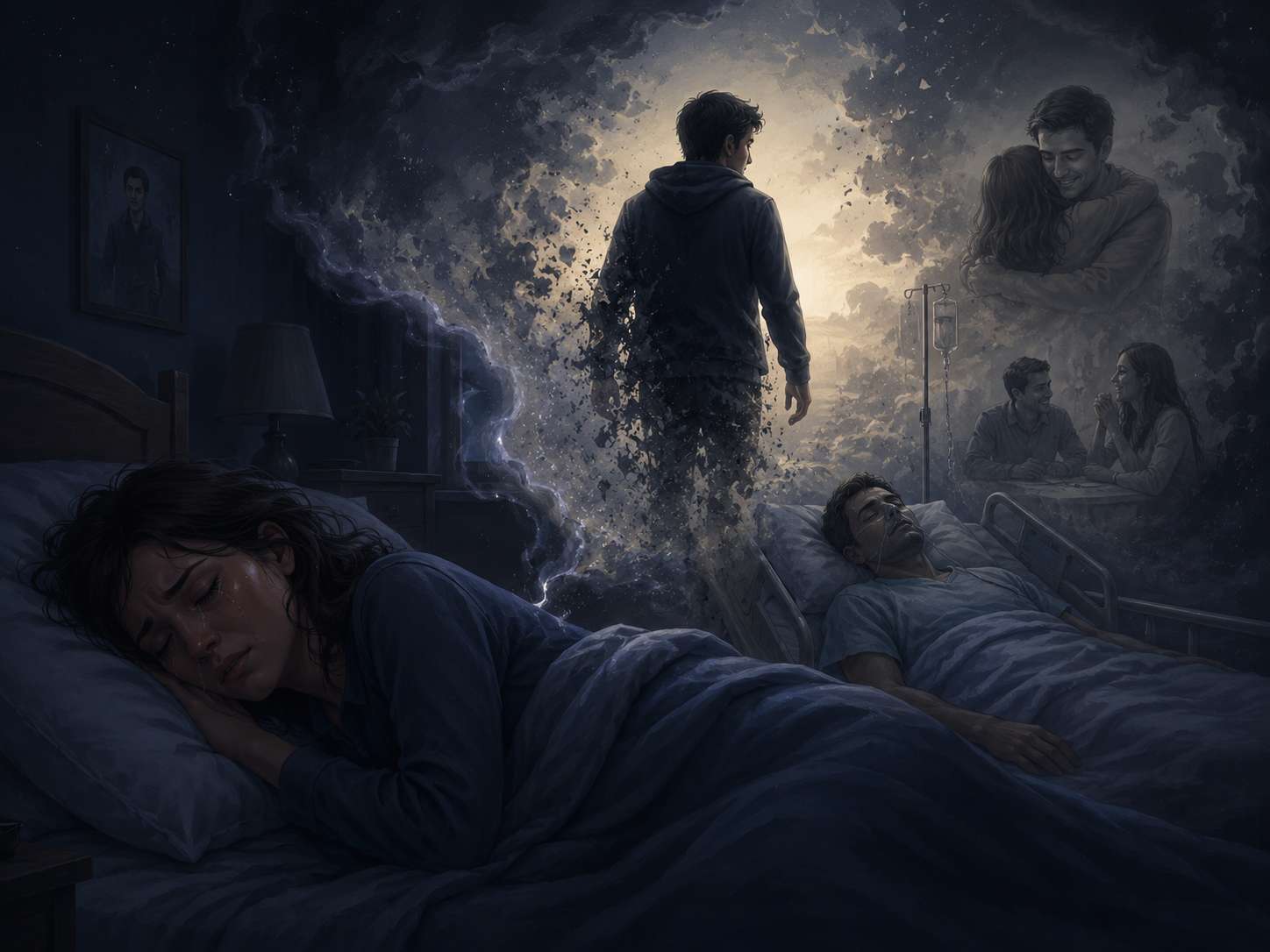
Few dream experiences are as emotionally disturbing as witnessing the death of someone you care about.
Perhaps the dream involved a parent, a spouse, a close friend, or another important person in your life. Even after waking, the emotions can feel surprisingly real. Many people describe a lingering sense of anxiety, sadness, or unease that remains with them throughout the day.
Because the experience feels so vivid, it is natural to wonder whether the dream carries a deeper meaning. Some people worry that it may be a warning or a prediction of future events. Others assume it reflects something hidden within their relationship with the person who died in the dream.
Modern dream research offers a more reassuring perspective. Dreams about death are relatively common and, in most cases, are not believed to predict actual death. Instead, psychologists often view these dreams as reflections of emotional concerns, personal transitions, fears of loss, relationship changes, or significant life events that the mind is processing during sleep.
To understand what such a dream may mean, it is important to look beyond the death itself and consider the emotional significance of the person involved, the circumstances of the dream, and what is happening in the dreamer’s life at the time.
Quick Answer
Dreaming about someone dying who is still alive does not usually predict a future death. In psychological interpretations, death in dreams often symbolizes change, transition, emotional processing, fear of loss, or shifts in relationships. The meaning depends largely on the dreamer’s emotions, personal circumstances, and the role the person plays in their life.
Why Dreams About Death Feel So Emotionally Powerful
Few experiences carry greater emotional significance than death. Even when it occurs entirely within a dream, the event can trigger reactions that feel remarkably real.
This happens because the emotional systems of the brain remain highly active during dreaming. While asleep, the brain can generate powerful emotional experiences that closely resemble those experienced during waking life. As a result, the sadness, fear, shock, or grief felt within a dream may continue after awakening, even when the dreamer knows the event never actually occurred.
Researchers have long observed that dreams frequently amplify emotions connected to important relationships. A dream involving the death of a loved one may therefore reflect the emotional importance of that person rather than any actual danger facing them. The stronger the emotional bond, the more powerful the dream is likely to feel.
This distinction is important because many people mistakenly assume that emotional intensity makes a dream more likely to be prophetic. In reality, the intensity often reflects the significance of the relationship rather than the likelihood of future events.
Why Death Often Symbolizes Change Rather Than Physical Loss
One of the most consistent themes in dream psychology is that death frequently represents endings, transitions, and transformation.
In everyday life, death marks the end of something familiar. Because dreams often communicate through symbolism and emotional associations, the mind may use death imagery to represent major changes occurring in a person’s life.
This does not mean the dream is predicting physical death. Instead, it may reflect the psychological experience of leaving one stage of life and entering another.
For example, such dreams sometimes occur during periods involving major transitions. A person may be graduating, changing careers, ending a relationship, becoming a parent, moving to a new city, or adapting to a significant life change. In each case, something familiar is ending while something new is beginning.
The dream may be expressing that emotional reality through one of the most powerful symbols available to the human mind.
The Person Who Dies Is Often More Important Than the Death Itself
When interpreting these dreams, many experts encourage focusing less on the death and more on the person involved.
Relationships shape how we understand ourselves and the world around us. As a result, people within dreams often represent qualities, emotions, roles, or life experiences that extend beyond the individual themselves.
A parent may symbolize security, guidance, or authority.
A spouse may symbolize intimacy, commitment, or emotional connection.
A close friend may symbolize companionship, shared history, or a particular period of life.
When such a person dies within a dream, the dream may be reflecting changes connected to what that person represents rather than the person themselves.
This is one reason dream interpretation rarely benefits from universal formulas. The same dream can mean very different things depending on the dreamer’s personal experiences and emotional associations.
Dreaming About a Parent Dying
Dreams involving the death of a parent are among the most commonly reported death-related dreams.
These dreams often occur during periods of personal growth, increasing independence, or major life transitions. Psychologists have long noted that parents frequently represent more than just individuals within dreams. They may symbolize protection, guidance, authority, stability, or emotional security.
Because of this, dreaming about a parent dying does not necessarily concern the parent’s well-being. In many cases, the dream reflects changes in the dreamer’s relationship with what that parent represents.
For example, a young adult moving away from home, starting a career, or becoming financially independent may experience dreams that reflect changing family dynamics. The dream may symbolize the end of one stage of life rather than concern about an actual loss.
At other times, particularly when a parent is aging or experiencing health challenges, the dream may simply reflect normal fears about mortality and separation. The subconscious mind often explores anxieties that people rarely discuss openly during waking life.
Dreaming About a Spouse or Romantic Partner Dying
Few dreams provoke more immediate concern than dreaming about the death of a spouse, partner, or someone deeply loved.
Many people wake from these dreams worried that they reveal hidden problems in the relationship or foreshadow future events. More often, however, such dreams appear connected to emotional changes occurring within the relationship itself.
Relationships are rarely static. Over time they evolve through different stages, each bringing new expectations, responsibilities, and challenges. A dream about a partner’s death may sometimes symbolize the end of one phase of the relationship and the beginning of another.
For instance, major milestones such as marriage, parenthood, moving in together, or overcoming a difficult period can fundamentally reshape a relationship. Although the relationship continues, the previous version of it effectively ends.
In other situations, the dream may reflect fears of vulnerability. Loving someone deeply often means recognizing that loss is possible. Dreams occasionally provide a space where the mind explores those fears in symbolic form.
Dreaming About a Child Dying
Dreams involving children are often particularly emotional because they touch upon some of the strongest protective instincts people possess.
When parents experience dreams about a child dying, the dream frequently reflects anxiety rather than prediction. Parenthood naturally involves concern for a child’s safety, health, and future. These concerns do not disappear during sleep.
Psychologists often view such dreams as expressions of responsibility, worry, or fear rather than literal messages.
Interestingly, these dreams may also occur during periods when a child is becoming more independent. Starting school, entering adolescence, leaving home, or reaching important milestones can create mixed emotions for parents. Pride and excitement may coexist with feelings of loss as familiar family dynamics change.
The dream may therefore symbolize a transition rather than a tragedy.
Dreaming About a Friend Dying
Friendships often become closely connected to particular periods of life, identities, interests, and experiences.
As a result, dreams involving a friend’s death sometimes reflect changes connected to what that friendship represents.
Perhaps a friendship has become more distant.
Perhaps life circumstances have changed.
Perhaps the dreamer is leaving behind a stage of life strongly associated with that relationship.
The dream does not necessarily indicate concern about the friend. Instead, it may reflect broader questions about personal growth, changing priorities, or evolving relationships.
In some cases, the dream simply highlights the emotional value of the friendship and the dreamer’s awareness that important relationships can change over time.
Dreaming About Someone You Have Not Seen in Years
Many people are surprised when a dream centers on someone who is no longer part of their daily life.
An old classmate.
A childhood friend.
A former coworker.
An ex-partner.
When such a person dies in a dream, the focus is often less about the individual and more about what they represent.
Dreams frequently draw from memory networks rather than current events. An old friend may symbolize a particular period of life. An ex-partner may represent a previous version of the dreamer. A former classmate may be connected to memories of youth, ambition, uncertainty, or personal development.
In these situations, the dream may be reflecting the end of a chapter, a changing identity, or the dreamer’s relationship with the past.
Fear of Loss and Attachment
Not every death dream symbolizes change.
Sometimes the simplest explanation is the most accurate.
Humans form deep emotional attachments, and with attachment comes the possibility of loss.
Psychologists have long recognized that dreams often reflect emotional concerns that remain active beneath conscious awareness. Even when people rarely think about losing loved ones during the day, those fears may occasionally emerge during sleep.
This does not mean the dream predicts anything.
Rather, it reflects the reality that meaningful relationships matter.
The stronger the attachment, the more emotionally powerful the dream may become.
In this sense, death dreams can sometimes reveal the depth of a relationship rather than any hidden message about the future.
Cultural and Religious Interpretations
Throughout history, many cultures have attached special significance to dreams involving death.
Some traditions interpret such dreams as signs of transformation, renewal, or spiritual growth. Others view them as symbolic messages related to personal development or changing circumstances.
In certain religious traditions, dreams may be understood within broader spiritual frameworks. These interpretations often vary significantly between cultures, faiths, and communities.
From a scientific perspective, however, there is currently no evidence that dreams can reliably predict future deaths or supernatural events.
While cultural and spiritual interpretations remain meaningful to many individuals, they should be understood as matters of belief rather than established scientific conclusions.
Do Dreams About Death Predict the Future?
This is perhaps the question most readers want answered.
Current scientific evidence provides no reliable support for the idea that dreams predict future deaths.
Researchers studying dreams have found that dream content is heavily influenced by emotions, memories, concerns, experiences, and personal relationships. Because death is one of the most emotionally significant concepts humans encounter, it naturally appears within dreams from time to time.
When a death dream later appears to match a real-world event, people often remember the coincidence while forgetting countless other dreams that never came true. Psychologists sometimes refer to this tendency as confirmation bias—the natural tendency to notice evidence that supports a belief while overlooking evidence that does not.
Although stories about prophetic dreams exist in many cultures, scientific research has not demonstrated that death dreams function as reliable predictions of future events.
What Science Says About Death Dreams
Modern dream research generally views death dreams through the lens of emotional processing rather than prediction.
Dreams appear to draw from a combination of:
- Personal experiences.
- Emotional concerns.
- Memories.
- Relationships.
- Ongoing life changes.
Because death symbolizes endings, separation, uncertainty, and transformation, it often becomes a powerful tool for expressing complex emotions.
Researchers increasingly view dreams as reflections of the mind’s ongoing efforts to process experiences and emotions rather than hidden codes waiting to be deciphered.
From this perspective, a dream about someone dying is best understood within the broader context of the dreamer’s life rather than as an isolated symbol with a fixed meaning.
This section intentionally stays aligned with our DreamDoze rules:
- Paragraph-first writing.
- No dream dictionary style.
- No sensational claims.
- No dramatic one-sentence paragraphs.
- Focus on psychology, relationships, emotional processing, and scientific interpretation.
- Minimal use of bullets except where they improve readability.
What Science Still Doesn’t Know
Although dreams have been studied for decades, researchers still cannot fully explain why specific people appear in specific dreams or why certain themes emerge at particular moments in life.
Scientists understand that dreams are influenced by memory, emotion, relationships, and recent experiences. However, they cannot reliably determine why one person dreams about a parent while another dreams about a friend, or why some life changes trigger death-related dreams while others do not.
Researchers also continue to debate the precise role dreams play in emotional processing. Some theories suggest dreams help the brain work through emotional experiences, while others argue that dreams may simply reflect ongoing cognitive activity during sleep.
As with many aspects of dream science, the evidence provides important clues without offering definitive answers.
DreamDoze Perspective
At DreamDoze, we believe dreams about someone dying are best approached with curiosity rather than fear.
The emotional intensity of these dreams often encourages people to search for a single hidden meaning or a prediction about the future. Modern dream research points in a different direction. Rather than forecasting events, dreams appear more closely connected to the dreamer’s emotions, relationships, concerns, and life circumstances.
When someone important dies in a dream, the most useful questions are often not:
“Is something bad going to happen?”
but:
“What role does this person play in my life?”
and
“What changes, fears, or emotions might my mind be processing right now?”
These questions tend to produce more meaningful insights than literal interpretations.
While death dreams can be unsettling, they often reflect the significance of relationships and the emotional importance of change rather than actual danger.
Frequently Asked Questions
Is dreaming about someone dying a bad omen?
There is no scientific evidence that dreams about death predict future events. Most psychologists view these dreams as reflections of emotions, relationships, fears, or life transitions rather than warnings.
What does it mean when you dream about a family member dying?
The meaning depends on the context of the dream and the relationship involved. Such dreams often relate to fears of loss, changing family dynamics, personal growth, or major life transitions.
Why do death dreams feel so real?
The emotional systems of the brain remain highly active during dreaming. As a result, emotions experienced in dreams can feel surprisingly intense and continue after waking.
Does dreaming about someone dying mean I am worried about them?
Sometimes. In other cases, the dream may reflect broader themes such as change, uncertainty, attachment, or emotional processing rather than concern about the person’s safety.
Should I tell someone if I dream they died?
That depends on the relationship and circumstances. In most cases, it may be more helpful to view the dream as a reflection of your own emotions rather than as information about the other person.
Bottom Line
Dreaming about someone dying who is still alive can be emotionally powerful, but it rarely means what people initially fear it means.
Current psychological research does not support the idea that such dreams predict future deaths. Instead, they are often associated with emotional processing, fears of loss, relationship changes, personal growth, or major life transitions.
The most meaningful interpretation usually comes from understanding the emotional significance of the person involved and the circumstances of the dreamer’s life rather than focusing on the death itself.
Like many dream experiences, these dreams may not provide simple answers. What they can provide is an opportunity to reflect on important relationships, ongoing changes, and the emotions that shape our lives both awake and asleep.